• Home
  • About
  • Workshops
  • Fine Bindings
  • Gallery ~ Books, broadsides and ephemera
  • Studio Rental, Residency & Instruction

Chad Pastotnik, Deep Wood Press

~ Fine letterpress and intaglio printing ~ Celebrating 35 years in 2027

Chad Pastotnik, Deep Wood Press

Category Archives: Equipment

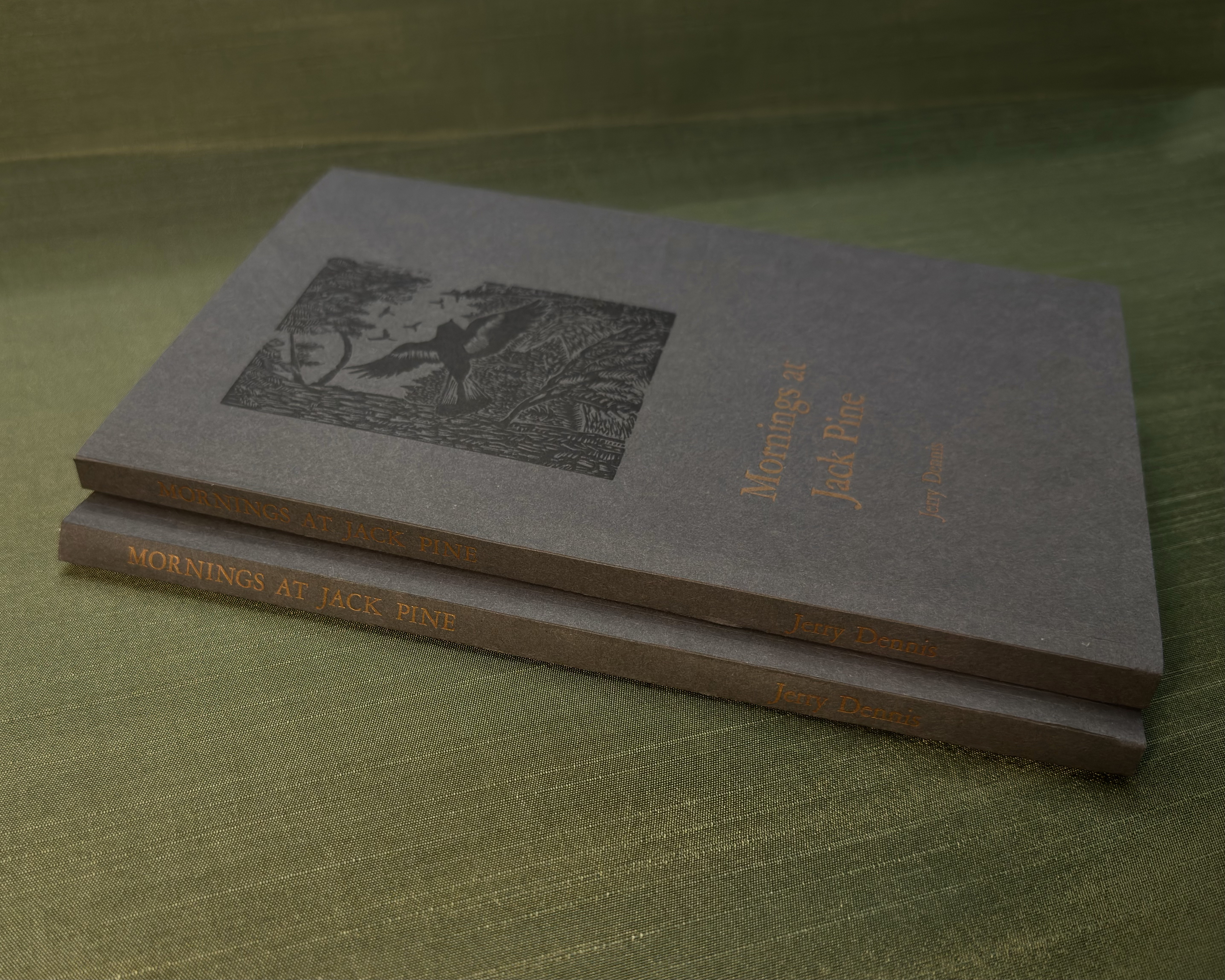
Mornings at Jack Pine paper cover edition

28 Sunday Jun 2026

Posted by Deep Wood Press in ATF Little Giant #6, Glenn Wolff, Jerry Dennis, Letterpress, Midwest Author Series, Mornings at Jack Pine, Wood Engraving

≈ Leave a comment

Tags

fine press books, Glenn Wolff, Jerry Dennis, Letterpress, literature, Midwest Author Series, wood engravings

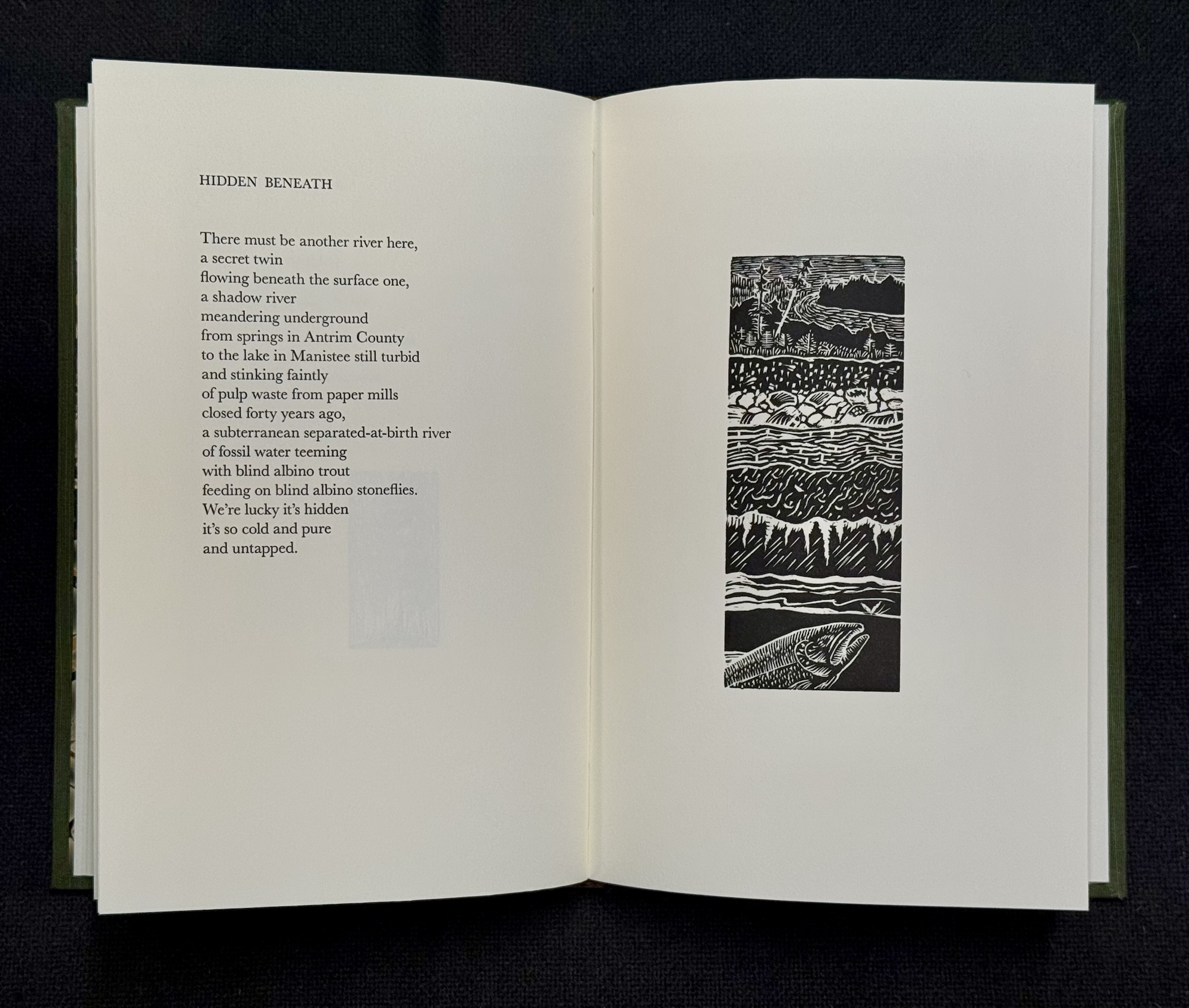
Mornings at Jack Pine first debuted earlier this spring at the Manhattan show and since my return to the frigid north I have been working to get this new version out. I am pleased to present the first book in my Midwest Author Series in a paper cover edition. As promised back in April, the type went back to work on my ATF Little Giant #6 cylinder press to create an extended edition with hopes it will reach a broader audience.

This moving body of work by Jerry Dennis is accompanied by 10 wood engravings by Glenn Wolff. Jerry turns his keen naturalist’s eye inward as well as outward, finding in the landscape of northern Michigan a mirror for grief, love, mortality, and the fierce pleasures of being alive. Graced with Glenn Wolff’s exquisite illustrations, Mornings at Jack Pine is a small book with large ambitions — funny, tender, elegiac, and shot through with the kind of hard-won wonder that only comes from paying close attention to the world for a very long time.

This is, essentially, the same book but re-imposed to be printed in 4 sections instead of 5 to facilitate the sewing of so many books and it is printed on domestic paper stocks. It is printed in 2 colors instead of 3 and I printed the wood engravings from reproductions on photopolymer because the original blocks were very temperamental. Because of difficulties getting the paper in the weight I started with the edition is limited to 125 copies instead of the 250 noted in the colophon.

Composed in Baskerville and Eusebius type it is printed on Mohawk Superfine 70lb text enclosed in French Paper Dur-O-Tone 100lb cover stock printed in black and copper inks. It is a sewn binding glued into the cover wrap.

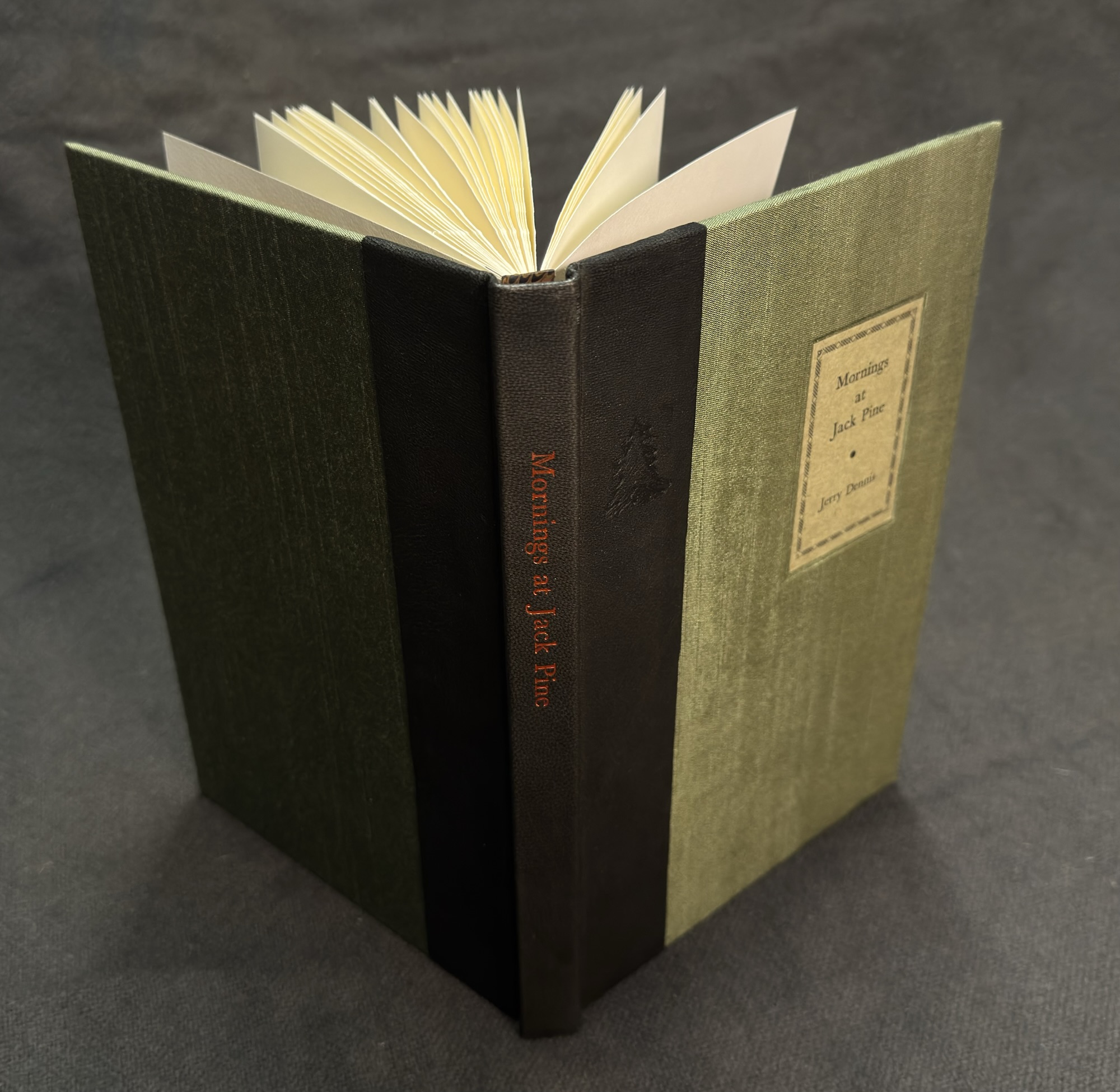
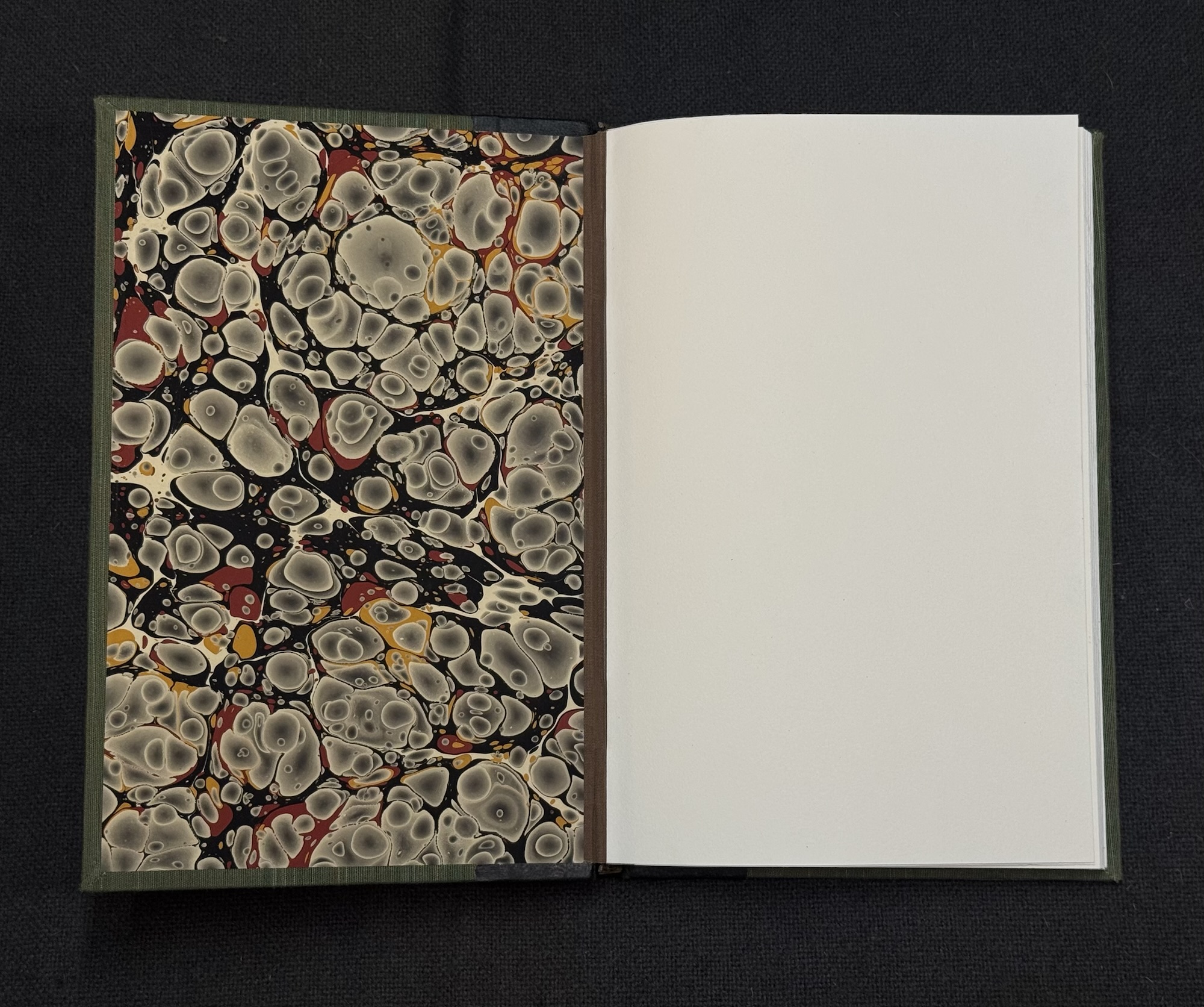
The deluxe copies are sold out but this version and the lettered copies are available on my newly updated website here for $70.00

More details about the book can be found here on an earlier blog post. The bindery monkeys will be here this week to get as many sewn as possible for the forthcoming release party in Traverse City, Michigan.

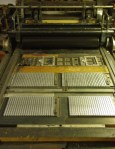
Printing the book pages on the Little Giant and a good look at the pressroom here at DWP.

AI cinematic video clip

AI cinematic video clip

Now this is funny – WordPress is now offering an AI generated video feature which I allowed to try and surmise this post. This is the abomination that it came up with. Trust me, this is inaccurate in every possible way ensuring Luddites like me to continue working without the AI overlords ever threatening to take real work from my hands!

Please share:

  • Share
  • Share on X (Opens in new window) X
  • Share on Facebook (Opens in new window) Facebook
  • Share on LinkedIn (Opens in new window) LinkedIn
  • Share on Tumblr (Opens in new window) Tumblr
  • Share on Pinterest (Opens in new window) Pinterest
  • Share on WhatsApp (Opens in new window) WhatsApp
  • Email a link to a friend (Opens in new window) Email
Like Loading...

A Return to Process and Dialogue

11 Saturday Oct 2014

Posted by Deep Wood Press in Books, Education, Equipment, Letterpress, Oak Knoll Fest, Printing

≈ 6 Comments

Tags

book arts, Chad Pastotnik, Deep Wood Press, education, Letterpress, Linotype, Oak Knoll Fest, Printing

First off, having recently returned from a most encouraging showing of my books at Oak Knoll this past week, I must say thank you to many who have followed this blog and whose friendships I continue to make and cement in the “real” world. I was amazed how many mentioned reading this or the social media bits of DWP’s online presence and I feel I must apologize for this blog having turned more into a PR tool or travelogue. It was my intention from the beginning for this to be more about process and dialogue. So let’s begin again and I will attempt to stay more on track though I will still mention new work or events but direct you to other sources for more details. This will be a somewhat longer post to get things rolling.

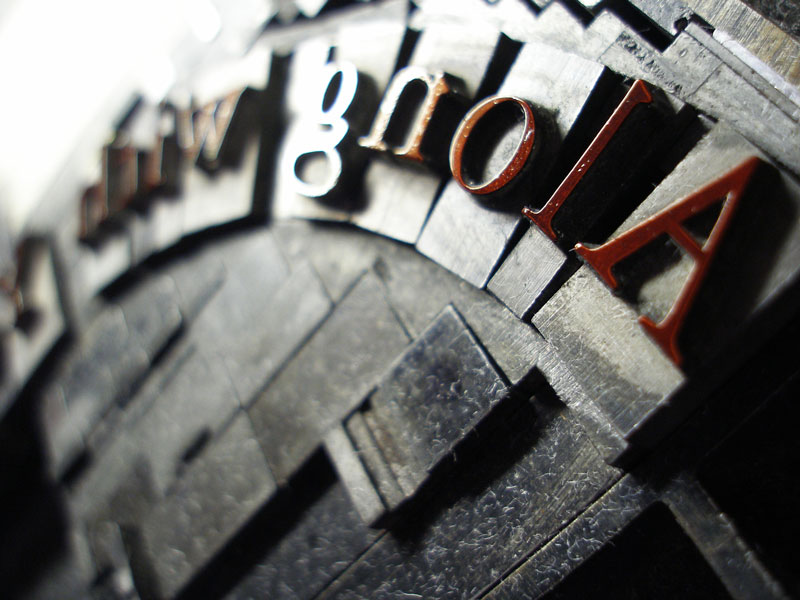
type hand-set on a curve

type hand-set on a curve

Dialogue – what is letterpress printing?

At these events and exhibits I have the pleasure of the company of fellow printers as well as a cultivated relationship with private and institutional collectors of my books. It is with interest I have noted a recurring theme of discussion which has been raging in the fine press world for over two decades but it seems the buying public is just starting to wonder: What is letterpress printing? Allow me a couple of paragraphs to cover the general process and history, neither exhaustive or fully concise:

  By definition I suppose it is printing from a relief surface via letterpress. Letterpress is a term that has only come into existence really in the past 50 years and has morphed into both verb and noun use. Prior to this time it was the only widely used reproductive process as innovated by Gutenberg in the 15th century and it was merely “printing” and those who printed were “Printers” Today, those of us who continue the tradition, draw on this legacy for better or worse.

  Gutenberg’s legacy is that of the matrix from which type is cast in a mould. Type is something you can pick up with your fingers and compose into words, form sentences, paragraphs and pages with. It is the famous “26 soldiers of lead” which conquers ignorance and tyrants. Type remained in this form until the late 19th century when machine composition became a possibility with the technology and resources made available by the industrial revolution and manifested by Monotype composition casting equipment and the Linotype and Intertype line casting innovations. Both of these new means of putting words into page form allowed for composition to be done via a keyboard and then cast into type metal from that action to form the composed page. With this innovation and increase in production some compromise was made in typography as compared to hand composition but refinements could be used to help negate and bridge the narrow gap. This technology remained in place essentially until the 1980’s with the advent of the ease of modern desktop publishing with the dark days of film composition enjoying a thankfully brief stay in the 60’s-70’s.

So why is the question being asked now – what is letterpress printing? What is new now and not part of the 500-year-old tradition of printing is the advent of polymer plate printing. Arguably this technology is what may have saved letterpress from near death and made it accessible and popular with small presses offering wedding invitations, business identities, packaging, ephemera and – books. Printing from plates is relatively easy and they are created predominantly on computers. No knowledge of the history or the art of printing is necessary nor are many of the skills ingrained in producing printing with metal types needed.

Nearly everyone with a computer can compose text, add illustration and even make a book. True also that anyone given a box of paint and a brush can paint a picture. The quality of the product created is the sum of the individual’s understanding of the process, their artistic abilities, level of craftsmanship and, I would add, their understanding of the history of their craft and those who shaped it. There are countless programs now in higher education across the US, the UK and beyond teaching letterpress and book arts courses in degree programs and, thankfully, almost all of them start teaching students the basics of hand typography – assembling type you can pick up from cases and composing the project as has been done since Gutenberg. The polymer machine sits in the corner biding it’s time and offering sweet promise of relative ease and speedy efficiency to be utilized later.

I fully acknowledge that now, at this point in time, it is very difficult to assemble a letterpress shop. The machines, fonts of type and supporting industry revolving around letterpress ceased to exist in the 60’s for the most part. Twenty two years ago when I started printing book forms I received the bulk of my equipment for free or little money merely to make room in more progressive established print shops for more storage or that new all-in-one color laser/dye sub/inkjet thing that did 90% of what their customers wanted. What is left now of the equipment is often quite expensive to purchase and, while type still exists, it is not the sturdy foundry type of the days of old and still commands a premium prices as well. Printing from plates also has the potential of producing work of the highest quality indistinguishable from metal type except maybe for being “too perfect” – not a guarantee but full potential if used by a typographer and designer skilled in better than average desktop publishing software.

linotype and hand set composition on the press
hand set type form on press
polymer plate going on a press

WHAT IS LETTERPRESS PRINTING?

Is it merely printing from a raised surface? Or is it more?

What is it to you? To what do you give value?

Please share:

  • Share
  • Share on X (Opens in new window) X
  • Share on Facebook (Opens in new window) Facebook
  • Share on LinkedIn (Opens in new window) LinkedIn
  • Share on Tumblr (Opens in new window) Tumblr
  • Share on Pinterest (Opens in new window) Pinterest
  • Share on WhatsApp (Opens in new window) WhatsApp
  • Email a link to a friend (Opens in new window) Email
Like Loading...
← Older posts

Unknown's avatar
Visit the main website at deepwoodpress.com to purchase available books and broadsides.

Enter your email address to follow this blog and receive notifications of new posts by email.

Join 911 other subscribers

Categories

Pages

  • About
  • Fine Bindings
  • Gallery ~ Books, broadsides and ephemera
  • Studio Rental, Residency & Instruction
  • Workshops

Enter your email address to follow this blog and receive notifications of new posts by email.

Join 911 other subscribers
wordpress visitor counter

By clicking submit, you agree to share your email address with the site owner and Mailchimp to receive marketing, updates, and other emails from the site owner. Use the unsubscribe link in those emails to opt out at any time.

Processing…
Success! You're on the list.
Whoops! There was an error and we couldn't process your subscription. Please reload the page and try again.

blog stuff

  • Create account
  • Log in
  • Entries feed
  • Comments feed
  • WordPress.com

Book Bindings Books Breon Mitchell - Franz Kafka Broadsides CODEX Education Equipment Fine Press Book Association Future Projects In the Penal Colony Letterpress Mad Parrot Press Manhattan Fine Press Book Fair Moon as Bright as Water Oak Knoll Fest PR and Media releases Presentation bindings Printing The Hunter Gracchus The Intruder The Mad Angler's Manifesto The Wind in the Willows Trout Vladimir Zimakov Workshop

On Facebook:

On Facebook:

Create a website or blog at WordPress.com

  • Subscribe Subscribed
    • Chad Pastotnik, Deep Wood Press
    • Join 179 other subscribers
    • Already have a WordPress.com account? Log in now.
    • Chad Pastotnik, Deep Wood Press
    • Subscribe Subscribed
    • Sign up
    • Log in
    • Report this content
    • View site in Reader
    • Manage subscriptions
    • Collapse this bar

Loading Comments...

    %d